Matthew H. Slater, BHC Director
Professor Christopher Haufe (Elizabeth M. and William C. Treuhaft Professor of the Humanities and Chair of Philosophy Western Reserve University) kicked off this year’s public event series “Oh the Humanities!” with (what turned out to be) a provocative lecture addressing the question of how humanities disciplines generate knowledge. I hear irritated mutterings from one flank of the room, “Well, obviously we do!” Okay, settle down Historians — your case seems clear enough (from a distance anyway). Haufe has in mind disciplines with more complicated records and public perceptions.
I’ll pick on my own (and his). Debates often last for millennia. How could that give us knowledge?! Contrast science — what many hold up as the gold-standard of knowledge-generation. Isn’t that what we should be aiming for? But there’s no “humanistic method” on a par with the scientific method. There are no precise experiments in the humanities. So . . . 🤷🏻♂️
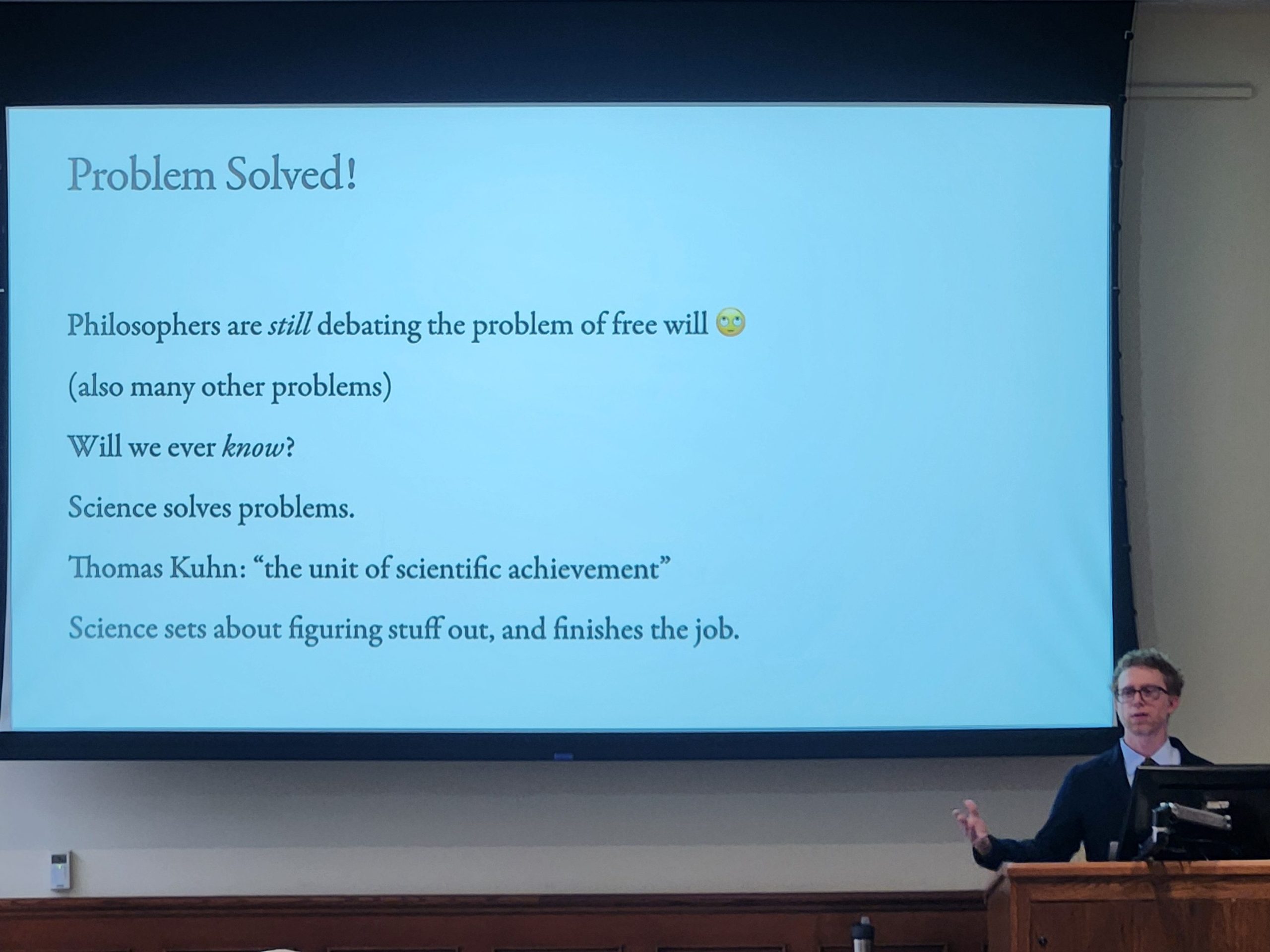
One of Haufe’s central contentions — explored in much greater detail in his book, Do the Humanities Create Knowledge? — is that the sciences and humanities are not as epistemically dissimilar as they might first appear. Indeed, the sciences also have a bloody history of social contention, toggling between periods of consensus and dissensus on various questions of interest. And even the sciences lack a “scientific method”! Most historians and philosophers of sciences chalk this up as a popular myth. Once we rid ourselves of oversimple models of science, we can see that knowledge generation in science is a product of fundamentally social processes and human judgment — as they are (Haufe argued) in the humanities.
This is not to say (as one questioner sought to clarify) that the sciences provide the sole model for knowledge generation in the humanities — nor even that knowledge generation is the sine qua non of a field’s value. To my mind, his analysis should be read as articulating a general thesis about the social structure of knowledge generation — of what he calls disciplinary knowledge, in particular — and noting that it very plausibly exists across many disciplines in the sciences and in the humanities. For those skeptical of the humanities’ value (but who see obvious value in the sciences), that strikes me as an insight that deserves to be more widely appreciated.
On the value question, Haufe had less to say directly. He doubtless assumes, with a lot of plausibility, that most people look to a scholarly discipline’s ability to produce knowledge as a potential source of value. It’s surely not the only source, as I emphasized. Nor should our conception of knowledge cleave too closely to the simple, propositional (as in ‘There is a planet outside of the orbit of Neptune.’). Both in the sciences and in the humanities, the knowledge produced is often tacit; or it is know-how rather than know-that. In any case, there’s obviously more to be said here about the epistemology and normative status of the humanities. As participants in our reading group noted, Haufe only scratched the surface of the interesting ideas in his book. Does it constitute knowledge? Time will tell.
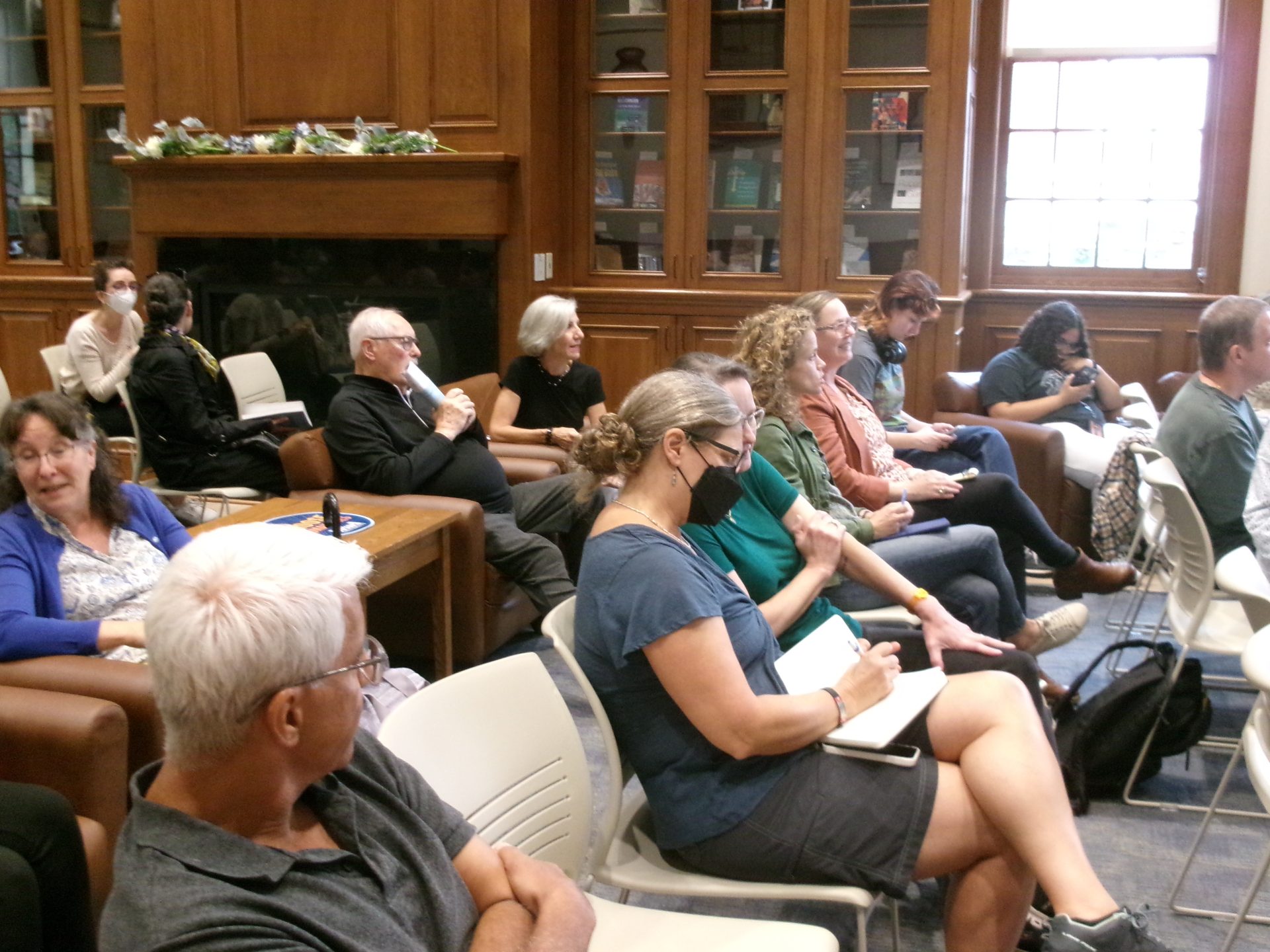
Photos from the lecture: