Karline McLain & Stuart Young discussed their recent and forthcoming books

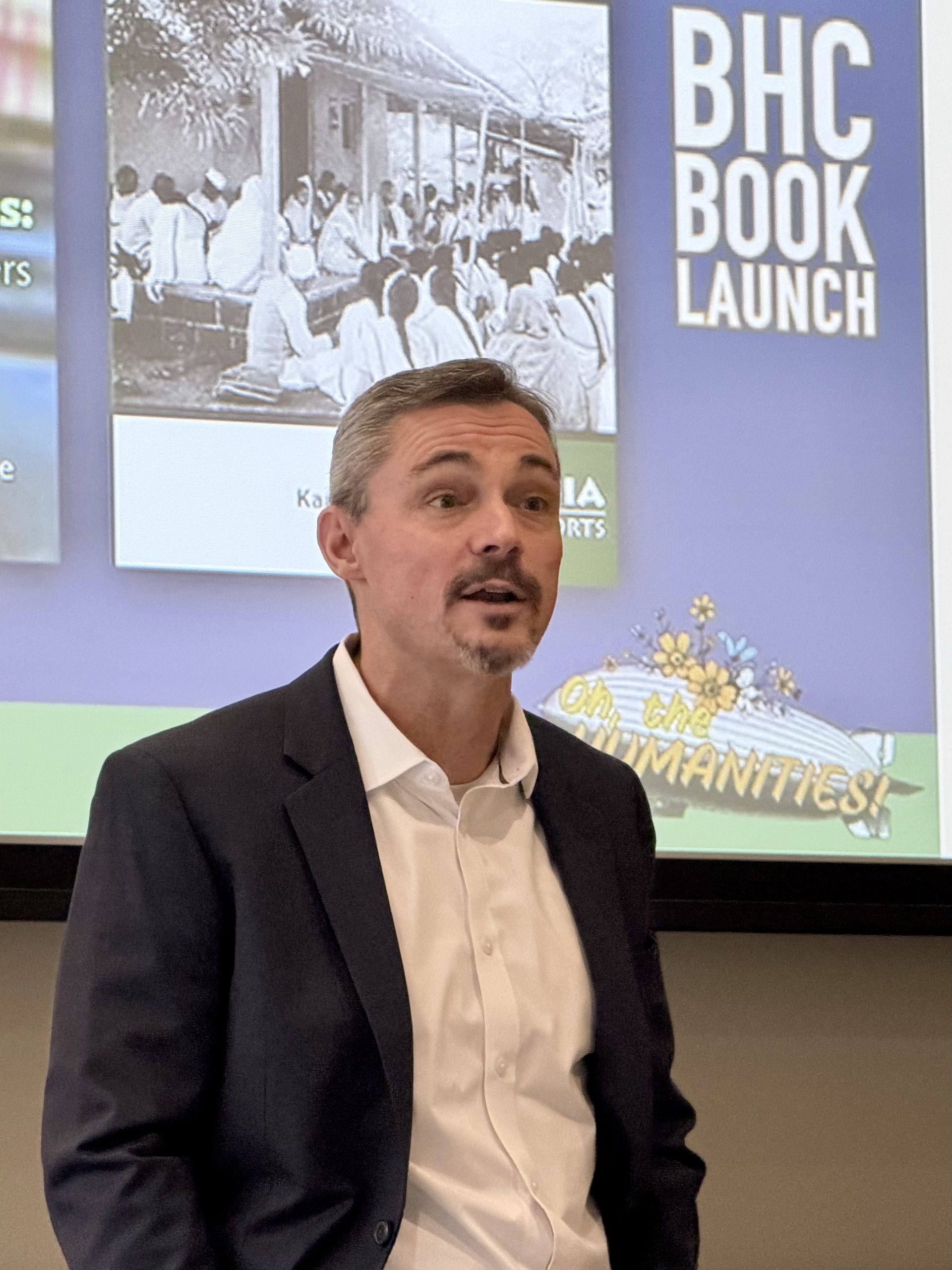
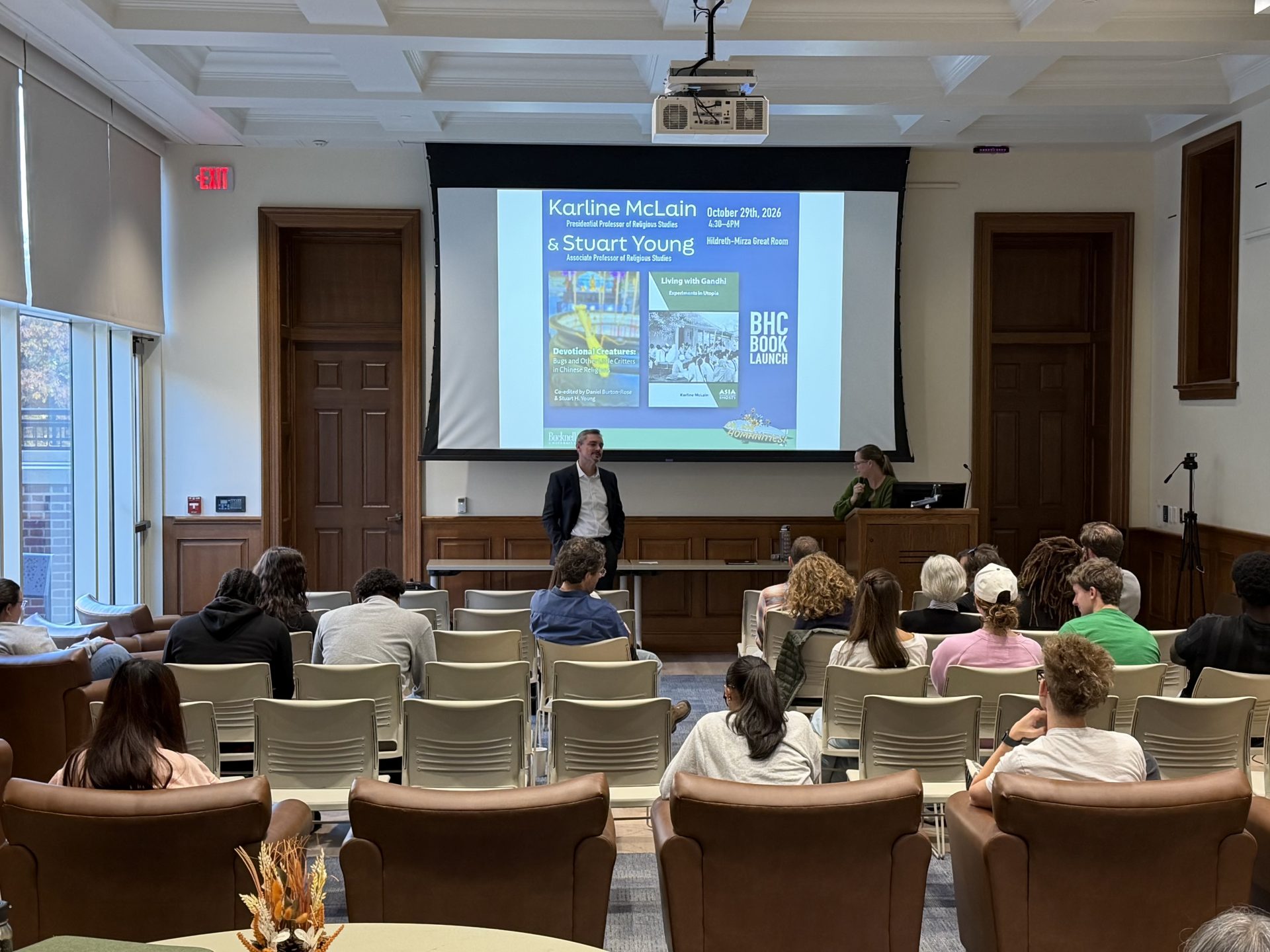
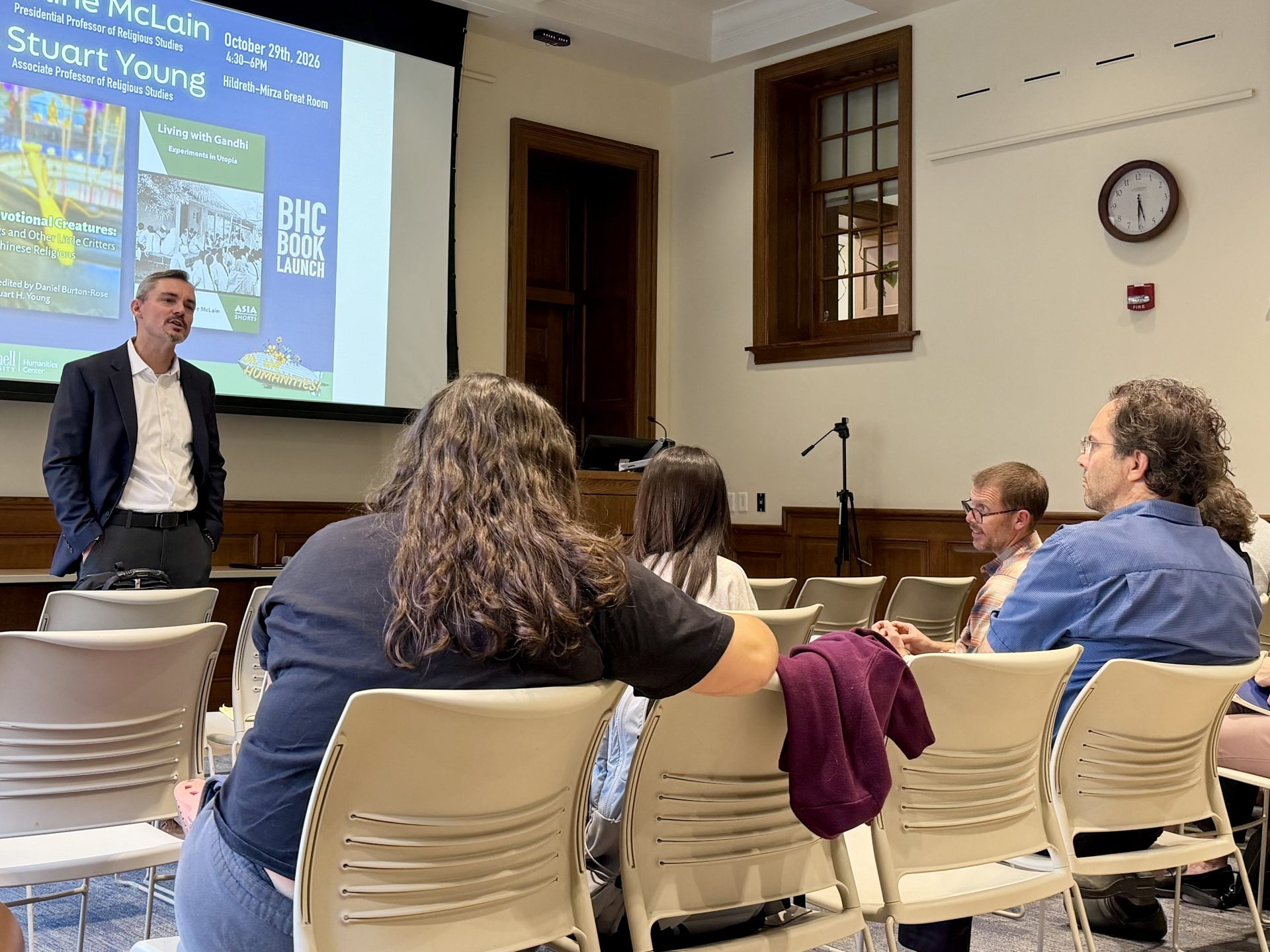
Thursday, October 29th, 4:30–6PM
Hildreth-Mirza Great Room
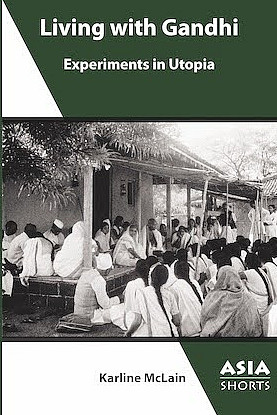
Living with Gandhi: Experiments in Utopia
by Karline McLain (Presidential Professor of Religious Studies)
Mahatma Gandhi was an anticolonial activist, lawyer, and politician. Less famously, but no less importantly, he was also a back-to-the-land farmer, a founder of communes, and a seeker of utopia. Living with Gandhi: Experiments in Utopia tells the story of everyday life at four of Gandhi’s communities in India and South Africa. It explores who lived at each community alongside Gandhi, the experiments they undertook in the shared pursuit of universal well being, and the connections that were forged between daily life and larger socio-political issues such as racial inequality, caste reform, and anticolonial activism.
The need to simplify life and focus on the greater good is no less urgent now than it was in Gandhi’s time. Reading about Gandhi’s communities allows us to think about a range of topics that can help us to formulate our own conception of the good life, including how to spend our finite time together on this earth; how the boundaries of inclusion and exclusion operate in our daily lives; and whether or to what extent self-sacrifice is necessary for universal wellbeing.
Published by the Association for Asian Studies and Columbia University Press, 2026.
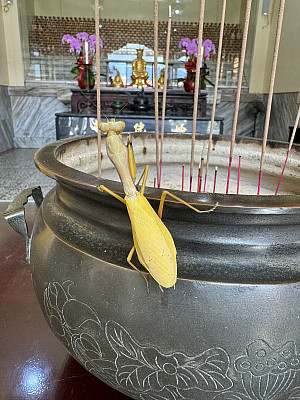
Devotional Creatures: Bugs and Other Little Critters in Chinese Religions
Co-edited by Daniel Burton-Rose & Stuart H. Young (Associate Professor of Religious Studies)
Devotional Creatures investigates how the many and various small critters known as chong helped develop Chinese religious teachings, practices, and material cultures. Today chong are generally understood as “insects,” but this narrow meaning became imaginable in East Asia only in the nineteenth century and only in limited scientific modernizing circles. In Chinese religious contexts, chong encompass a host of vibrant beings along a spectrum of tangible to intangible, from amphibians, arachnids, and reptiles to body worms and demons. Chong are liminal and anomalous creatures, astral and cosmic as much as chitinous and chthonic. They are ontologically contiguous with humanity and divinity.
Contributors to the volume explore how these little world makers, materially and symbolically, have worked together with human beings to co-create all manner of things that constitute Chinese religions, including imperial agricultural rituals, medieval Buddhist monastic regulations, and Daoist exorcistic rites as well as late imperial morality books, anomaly accounts, and materia medica. In contemporary times, common and pervasive chong such as ants and cockroaches instigate merit-generating advances in Buddhist monastery spaces, regulations, and ritual and hygienic practices, while fierce chong like wasps and centipedes imbue statues of deities with martial prowess for divine and human ends. Chong continue to play important roles in shaping more-than-human ethical codes, ritual procedures, monastic precincts, and ideals of mor(t)ality and spiritual perfection.
Devotional Creatures illustrates how multispecies relations that permeate daily lives and transgress bodily boundaries have driven religious imaginaries in diverse and unexpected ways across regions now associated with China. It will appeal to students and scholars of Chinese religions, Buddhist and Daoist studies, and animal studies.
Forthcoming from University of Hawai’i Press, 2027.